
I Often Think About Quitting the "Art World.” Here's Why I Stay.
On disillusionment, devotion, and the community I actually belong to


I need to confess something: I often think about changing industries.
It’s wild to admit out loud, given how much time I’ve spent and the stability I sacrificed to get here. But there it is. The cat’s out of the bag. While I have the privilege of working for myself and don’t depend on an institution for growth, entrepreneurship brings its own challenges.
It turns out I’m not alone in these feelings. A recent report from Artnet and the Association of Women in the Arts (AWITA) sharpens that point by capturing the structural pressure many of us feel. “Hardwiring Change: Buying Back Time,” the second annual collaboration between the two organizations, offers a detailed picture of who is, and, crucially, who isn’t, able to build a sustainable long-term career in the arts. Drawing on responses from over 2,000 survey participants, it points toward tangible solutions: fair pay, more transparency in decision-making, mentorship, and better tools to reduce mounting administrative burdens.¹
The numbers are sobering. According to the report, “nearly half of women aged 25 to 44 surveyed are considering leaving the arts within the next five years, with the highest rate (50.6 percent) among women aged 35 to 44, precisely the cohort expected to move into leadership roles.”¹
I’m not sure this issue is unique to women alone, though I certainly know the pay and opportunity gap is still very real. I also know many creative entrepreneurs have weathered enormous setbacks in the past decade. I see new platforms rising and others closing; that’s the cycle of life.
I recently went to the Juxtapoz website to resubscribe to their print edition, only to discover they no longer offer one. The founder started a new project (Unibrow), which was reassuring, but if publications like this are downsizing, it’s a sign of the times.
While most of us don’t identify with the high art market, the headlines still take a toll on our confidence. In 2023, during a post-COVID crash, emerging artists whose work had reached record prices found it resold, flipped, and massively devalued. More recently, Pace Gallery announced staff and artist cuts, a common occurrence in turbulent economic times, but one handled with little grace. As critic Jerry Saltz wrote in Vulture: “Galleries are supposed to protect artists. Even difficult separations are usually handled quietly, privately, respectfully. Instead, dozens of artists found themselves effectively listed in a public accounting and then left to explain the situation to the world. Whatever the intention, the move felt much like the current Pace itself: chaotic, careless, and a little undignified.”² One of the artists cut loose, Glenn Kaino, put it even more plainly: the gallery’s model had been “optimized for a vision of the art world that never materialized.”²
Now that I’ve addressed the heavy feelings I’ve been stewing over, let me tell you why I’m still here.
It’s for the art and the artists, of course.
Let me rewind to about a year ago. It was a warm October day, and I was strolling through Cape May after finishing a half-marathon, looking for something cold to drink and a bite to eat. My friends and I wandered through one of my favorite coastal Victorian towns when we stumbled across Jawbone Gallery. The art centered on oceanic themes, but it was a far cry from the typical tourist gallery. Every piece enchanted me. I even recognized a chandelier by Create! Magazine Issue 1 artist Adam Wallacavage. Learning that the gallery was founded by a local artist moved me deeply. Moments like this remind me of the magic, power, and community that art brings to our lives.
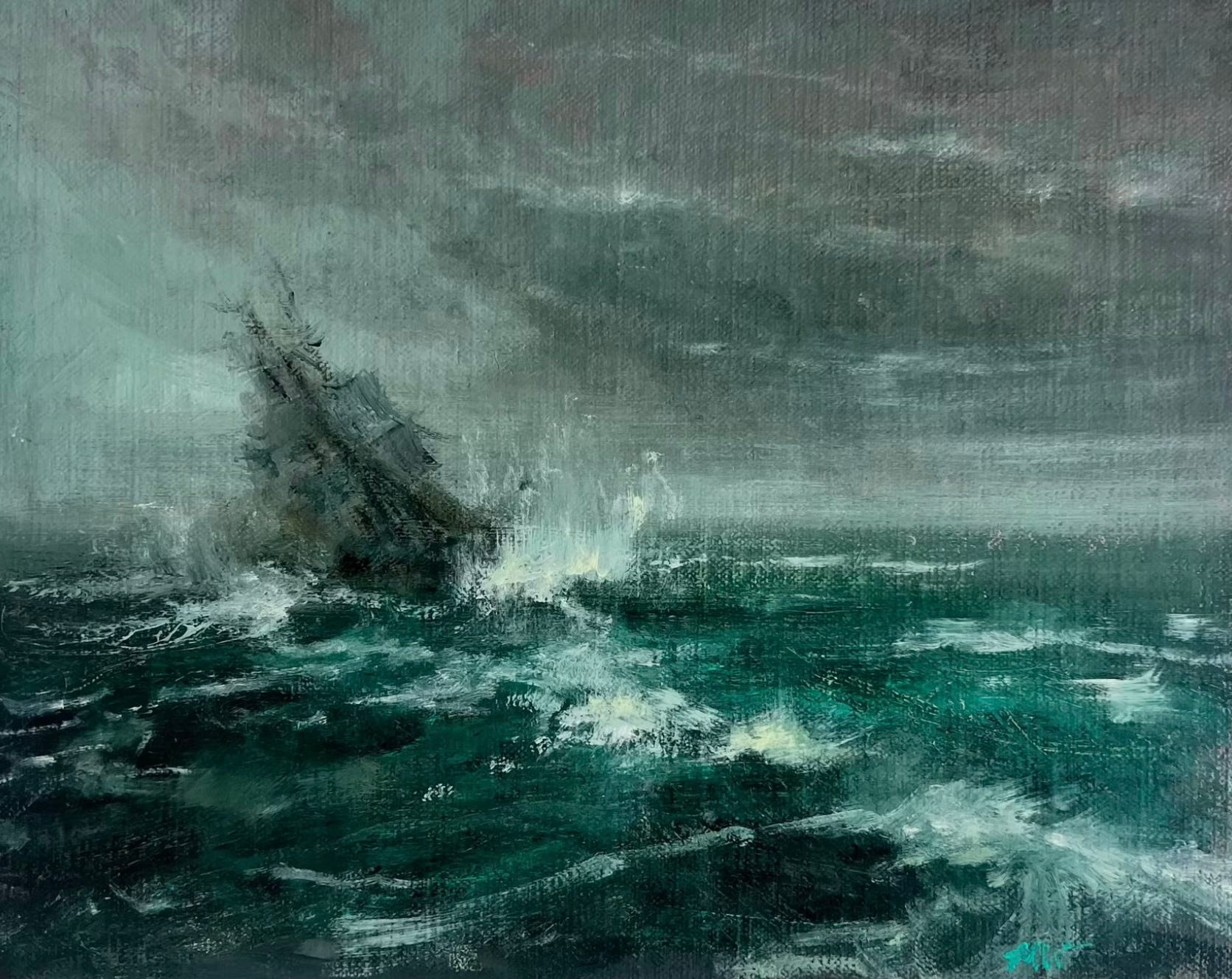
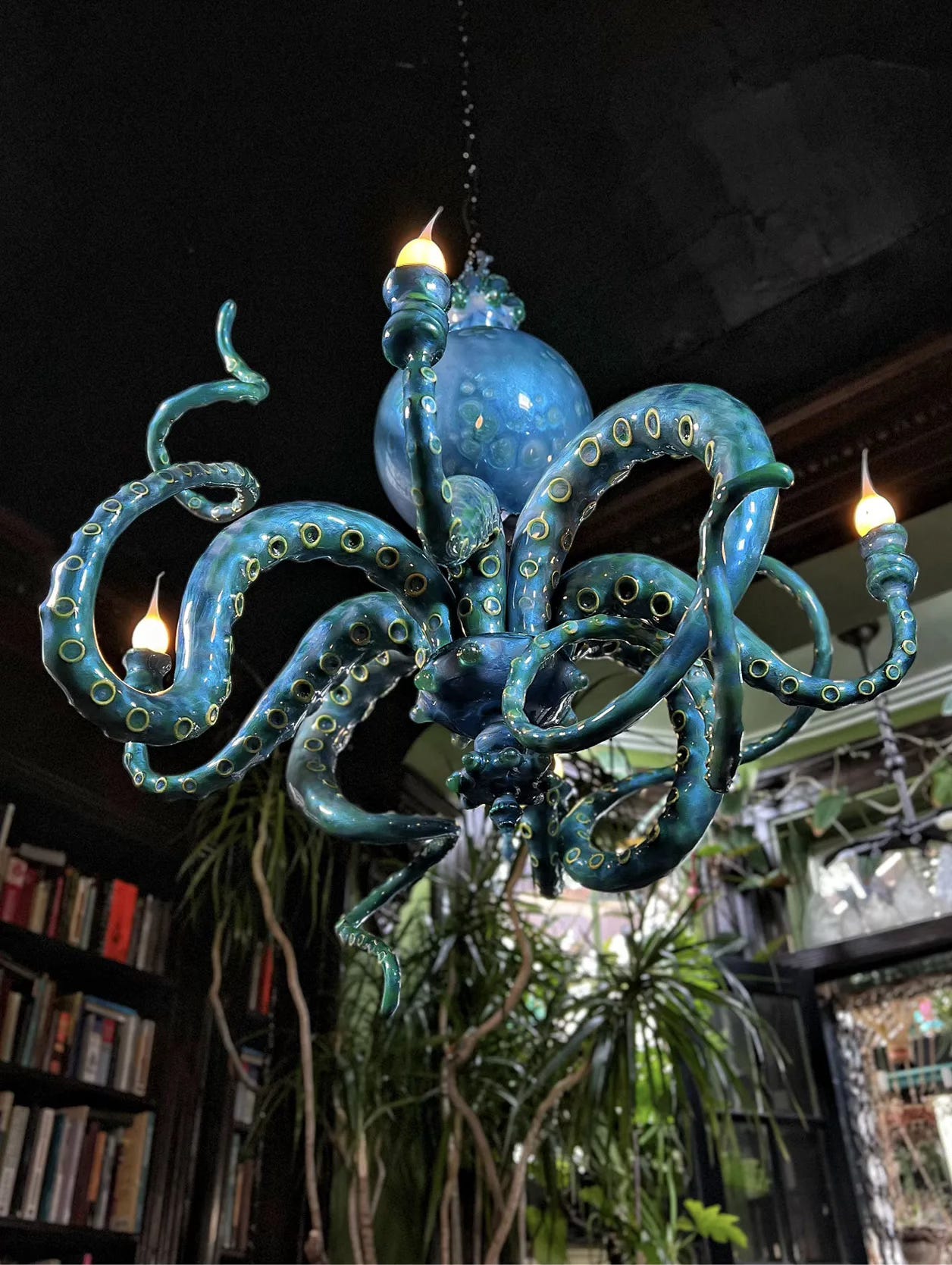
For me, falling into art-related rabbit holes is the best way to get inspired and step into another creative person’s world. Nothing compares to discovering a new artist or a gallery that seems to exhibit everything you instantly fall in love with. Even online—a new magazine, a Substack, a creator with that certain magic touch.
As an artist, I find inspiration in nature, personal stories and experiences, and other artists. Having your own voice is important, but we don’t make art in a vacuum. It’s remarkable to see how someone translates a subject in a completely different style. Visit any art fair or museum, and you’ll see the many ways people have captured an emotion, a light, a moment.
When I discover a new maker on Instagram or in a magazine, I head to their profile or website and scan through their work. I love learning more about someone’s journey. As an editor, I might take it a step further by reaching out for an interview or saving their work to my favorites folder.
Other than making art, being smitten by artists is my second favorite experience. Seeing how someone finds the visual vocabulary to express the light, the emotion, the mood that I recognize always feels like a small and mighty miracle.
If I’m being honest, sometimes I forget this miracle exists.
I forget about the peace I feel in the studio, sketching plants in my backyard, or strolling through galleries—using up my phone storage to capture everything I’ve seen in a single afternoon. Sometimes I overlook the fact that art saved my life.
Before I even graduated from art school, selling paintings was supporting me financially, if only in small ways at first. I forget that art introduced me to some of my best friends, helped me land book deals, allowed me to travel the world, and, most importantly, gave me an outlet for experiences too big for words. Art has been my medicine, my therapist, my best friend, and my guide. So why are there still days when I feel like turning my back on the “industry”?
The first distinction we must make is that the art world is not all-inclusive of art itself.
We know this simply because terms like “outsider art” exist. We know it because “self-taught,” “MFA,” and “lowbrow” are still ways we describe and sort one another. Of course, descriptive language serves a purpose, but somewhere along the way, a select few at the top of the art world created the illusion of a holy deity: the glowing, sterile white cube that anyone who dreams of being an “official” artist must aspire to. While there is nothing wrong with the high art market, we need to remember that it is only a microcosm of the larger universe of art. Humans have been creating since the dawn of time, but in our current age, gatekeepers push some artists out and place others on pedestals, only for them to come crashing down when the next star arrives.
Upon reflection, my disillusionment isn’t really with art itself. My frustration is with the upper echelon of the art world and how it shapes our relationship with art, even when we aren’t directly part of it. Most people I know have never shown at Art Basel and are not represented by a blue-chip gallery. I’ve met incredibly accomplished artists with no connection to that world who wouldn’t have it any other way. Most people I know create work, support themselves in a multitude of ways, and hope to find partners who help place their work and create opportunities for the skills they worked hard to acquire.
Like all of us, I have bad days. And on those days, I question my decision to get into this line of work. I could have been perfectly happy painting on weekends while keeping a steady day job, and never taken the risk of becoming an artist and running an independent publication. I took so many chances. I bet on myself. I bet on this community. I came dangerously close to losing it all, borrowed against myself to keep it going. I’m still here, still using my creativity to keep this thing moving forward because I believe in what it makes possible. But on the bad days, I dream of being anything else. A doctor. A lawyer. Back in a cubicle.
Of course, I know I don’t actually want that.
So what keeps me going?
Remembering that art lives in the world. Art isn’t confined to the white walls of a museum or a fancy New York gallery. Art is on our clothes, our ceramics, the walls of your local coffee shop, the pattern on the giant Stanley cup I’m drinking water out of, the cover of your favorite book or record. It is not gatekept by industry experts. It is not exclusive to those with MFAs and PhDs. It is available to everyone who hears its calling.
I told my friend Marina via voice memo the other day that, after taking a step back, I’ve decided I don’t want to quit “the art world” I was never fully a part of. I’m part of a community of artists: galleries that care about art, not just fame or ego; collectors who fall in love; fair organizers sweating to help artists expand their networks; mentors helping others find their paths. I want to be part of building a different kind of world, one that shows people you can be a talented, hard-working artist without selling your soul. You can find recognition and success without walking on eggshells or being imprisoned by the way you make or share your work.
Artist and educator Mark Dion put it well in a recent New York Times piece, asking artists to imagine a more utopian art world: “Why not make your own art world? When you go to places like New Orleans, there’s an incredible art world, and those artists don’t give a damn about what’s happening in Basel. They’re a community, and they support each other. Some break out, and some don’t, but they’ve built something.”³
That is exactly what I want. Not the version of the art world that dropped artists from a roster via a press release. Not the one where nearly half of the next generation of leaders is already planning their exit. The one being built quietly, in studios and community spaces, independent publications, and coastal towns with galleries that make you stop in your tracks.
I know I’m idealistic. But even if my contribution is small, choosing not to give in to cynicism and injustice, resisting the numbness and the snobbery, it matters to me. To stay in touch with my soul. To care about my neighbors. To feel like I have something to say, and to know that no one can stop me from saying it in my own way, through my art. Artists are visionaries and thinkers. Let us refuse to be squeezed into small boxes.
Focus on the art. Focus on the good people still making it, advocating for it, collecting it, and speaking out about it. Focus on the joy, the beauty, and the quality of life it brings us. And maybe, together, we will build something more sustainable and supportive of the people doing the heavy lifting.
¹ “Hardwiring Change: Buying Back Time,” Artnet News in partnership with the Association of Women in the Arts (AWITA), 2026, https://news.artnet.com/art-world/hardwiring-change-report-2026-2779250.
² Jerry Saltz, “How Pace Gallery Broke Itself,” Vulture, New York Magazine, June 11, 2026. Glenn Kaino quoted therein.
³ Andrew Russeth, “8 Proposals for a Better Art World,” T: The New York Times Style Magazine, June 15, 2026, https://www.nytimes.com/2026/06/15/t-magazine/fairer-art-world-ideas-funding.html. Mark Dion quoted therein.
 | A guest post by
|
Great article! You are right…. Art continues to thrive outside the ‘Art World’, especially by underrecognized artists who are disabled, neurodivergent, bipoc, etc, or anyone else who historically had less access to professional success.
"Remembering that art lives in the world. Art isn’t confined to the white walls of a museum or a fancy New York gallery. Art is on our clothes, our ceramics, the walls of your local coffee shop, the pattern on the giant Stanley cup I’m drinking water out of, the cover of your favorite book or record. It is not gatekept by industry experts. It is not exclusive to those with MFAs and PhDs. It is available to everyone who hears its calling."
Thank you for sharing such a personal essay with all of us here. You're definitely not alone in your thoughts and wanting to cut loose from art altogether. This essay hit close to home for me, as I'm sure it has and will for so many others. Thank you.
We're building a new community where art isn't just transactional or driven by ego, but instead built through true collaboration and the innate desire to share our creativity with anyone. You're doing great work, and I'm so happy I've found your magazine.